5 Most Common Caulking Mistakes
Every editorial production is independently selected, though we may be compensated or receive an affiliate commission if you purchase something through our links. Ratings and prices are accurate and items are in stock as of time of publication.
When the time comes for y'all to pick upwards that caulking gun and seal a shower or lay a new bead on an exterior siding seam, watch out for these aggravating pitfalls.

Anyone who owns a abode somewhen faces the inevitable: A stale, cracked or flaky caulk seal. These can announced near anywhere in your home, inside or out.
Of course, the number ane pitfall is never using caulk around your abode. Caulk eventually fails and that means water getting where it shouldn't causing expensive damage) or energy loss (as well expensive) because air can movement freely in and out of your home.
When the time comes for you lot to selection upwardly that caulking gun and seal a shower or lay a new bead on an exterior siding seam, watch out for these aggravating pitfalls.
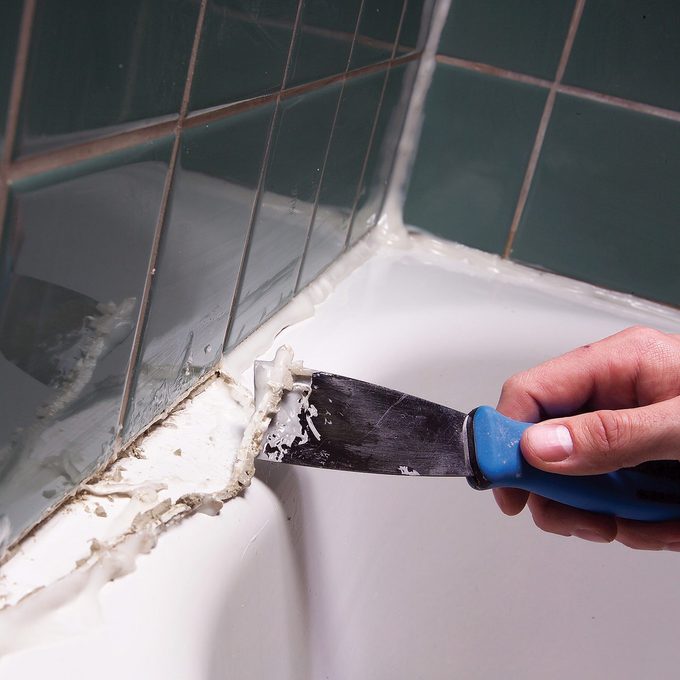
Don't Skip Prep
The first common mistake happens before you even open the tube of caulk. Without proper surface training, your new caulk volition non last. As tempting equally it is to quickly lay a new bead and forget about information technology, you practise need to completely remove erstwhile caulk, flaking paint or crumbling grout; repair any surface damage and and then lay the new bead.

Cut Right
When you open up a tube of caulk, the tapered tip on each tube allows you to custom-size the opening for your specific job. Many people cut the tip and offset caulking without regard for the width of the crevice they plan to seal. This results in too much material on the surface, poor adhesion and/or a sticky mess. Cutting your tip slightly narrower than the opening and apply pressure level and speed to accommodate the width of the bead.

Mind the Gaps
When it comes to width, another pitfall emerges—filling large gaps with caulk. Openings wider than one-quarter inch or more than than half inch deep require backing material, such every bit foam rope. Pumping a huge crevice full of caulk is expensive and affects production functioning. Bankroll material optimizes the thickness of the bead and allows for the best cosmetic finish.

Practice Patience
Many people charge right in, applying material immediately to the job at hand. Creating the best looking, virtually effective bead of caulk takes some skill. Instead, grab a grocery purse and practice a bit to become a feel for pressure command and how the bead comes out of the tip. Consistency is key. A derivative of this is jumping into a long bead without a pause. Nearly the end, yous may run out of space for the caulk gun. A sudden stop results and your carefully crafted bead becomes a mess. Work from each edge to the middle, or kickoff by caulking the final 6 inches first. Do your best to keep pressure level, speed and angle consistent.

Don't Forget the Concluding Step
The last common pitfall involves finish. Then, y'all laid the most even, beautiful bead out of the tube. Looks bang-up, you must be done, correct? Wrong. Don't miss the concluding disquisitional stride in the process: Tooling. Don't become fooled by terminology here. Most of the time, the only additional caulking tools required are a fingertip, some h2o to dip it in and some paper towels. Smoothing the dewdrop with calorie-free, steady pressure from your fingertip (or an ice cube or the back of a metal spoon for exterior caulk) does two things—it forces the caulk firmly confronting both surfaces and creates a make clean, tidy appearance.
Source: https://www.familyhandyman.com/article/common-caulking-mistakes/
0 Response to "5 Most Common Caulking Mistakes"
ارسال یک نظر