What Can We Infer Art Is Working on During These First Few Pages and Why Might It Seem Unusual
The power of pictures. How nosotros tin can apply images to promote and communicate science
sevenWe've all heard the cliché, "a picture tells a chiliad words", but there is real value in using images to promote scientific content. Images help usa learn, images grab attending, images explain tough concepts, and inspire.
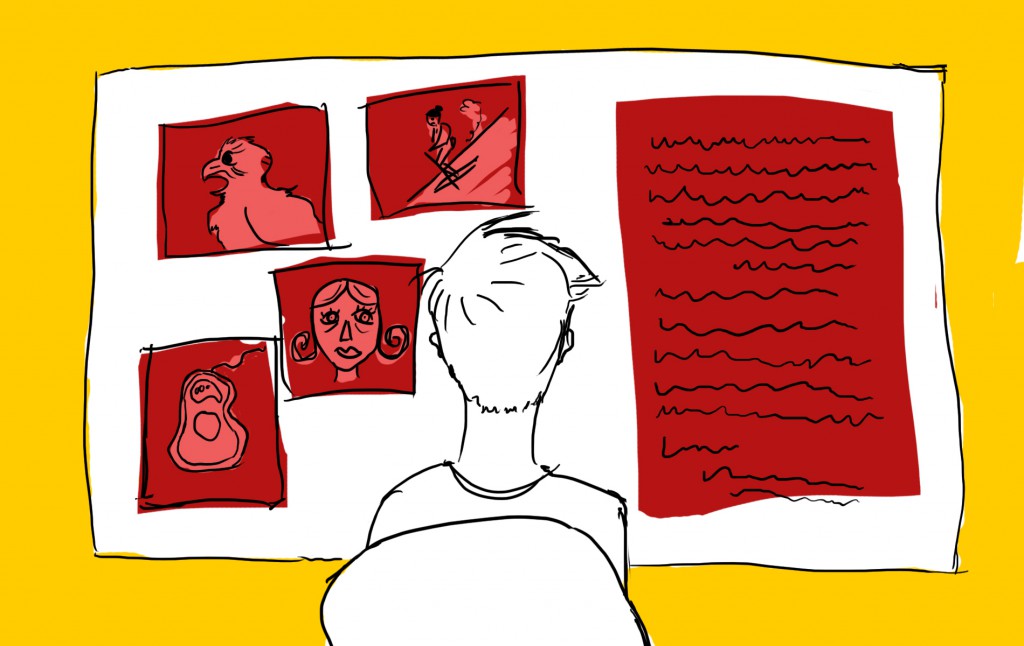
Why do we love images and then much?
We are very visual creatures. A large percentage of the homo brain dedicates itself to visual processing. Our honey of images lies with our cognition and ability to pay attending. Images are able to grab our attention easily, we are immediately drawn to them. Call back about this blog, for example: did yous look at the words first, or the epitome?
We process images at an alarming speed. When we run into a motion-picture show, we analyse it inside a very brusk snippet of fourth dimension, knowing the meaning and scenario inside information technology immediately. The man brain is able to recognise a familiar object inside 100 milliseconds. People tend to recognise familiar faces inside 380 milliseconds, which is pretty speedy.
Vivid colors capture our attention considering our brains are wired to react to them. Our vision senses are by far our most agile of the senses. This may be thanks to our evolution. Quick processing of visual information would have saved our ancestors from the attack of a predator or during a hunt for nutrient. A gatherer would need to be able to place certain shades of crimson berries during their forage. These primitive behaviors come into play even now in our everyday lives. This is ofttimes a fact that advertisers utilize to their advantage.
Images on social media
As Social Media Assistant at BioMed Key, one thing I've realised is how vital images are in my role. A post on social media accompanied by an image is 10 times more likely to receive appointment. Visuals are one mode of grabbing your audience's attending and gaining interaction, specially on Facebook. With this in listen, you lot tin can use these images to drive users to research.
And what if you have limited characters to write with? Twitter only allows users 140 characters of text, which tin can sometimes brand it difficult to convey a complex bulletin. With an image, you can help explain these tough concepts without taking up too much space. Here'due south an example:
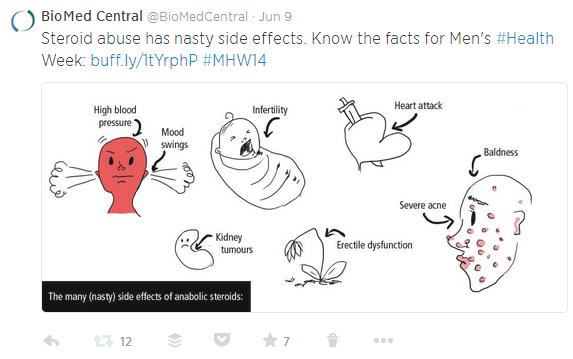
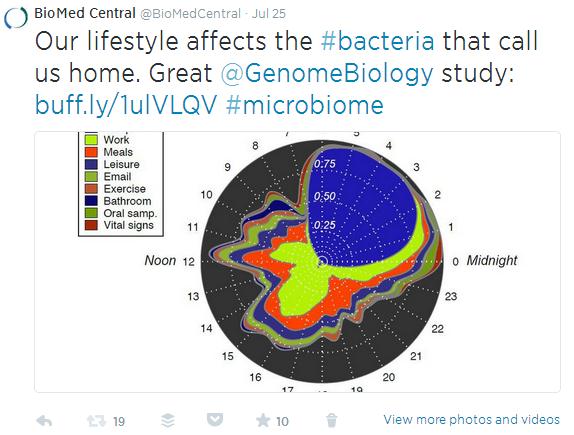
Images as well take the potential to get an emotional response from your audience. This is necessary when if you want the work you're promoting to have an affect on users.
Tumblr
We are seeing plenty of researchers and institutions taking advantage of images, especially through the microblogging service, Tumblr. Publishers, institutes, researchers, and schools are using Tumblr to promote scientific findings, with the assist of vibrant and appealing images. Tumblr is too a great way to bring awareness to the research itself.
There are a option of vivid Tumblr blogs for science advice. There's the Great British Bioscience (BBSRC) blog, providing bite-sized bioscience highlights. Yous can become your daily dose of biomedical images with the MRC's Biomedical Picture show of the Day (BPoD) web log. Meanwhile, Biocanvas, the blog, unleashes the true beauty of scientific discipline with dazzling photos that could easily be pieces of artwork. Later on something more than unusual? Try this scientific illustration Tumblr.
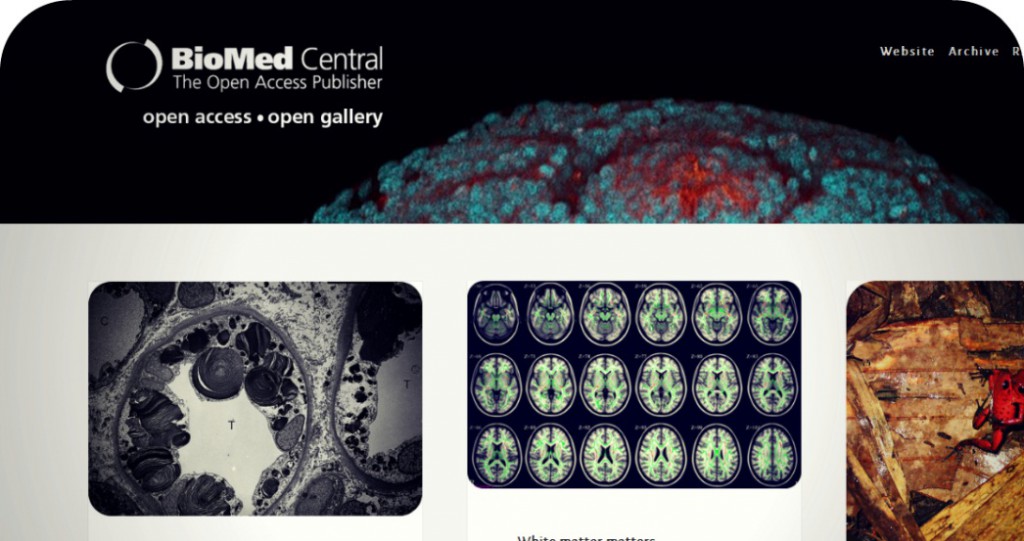
With this in listen, we have started our ain BioMed Central Tumblr, for scientific and medical images. We want to show that scientific discipline can be cute.
Images assist educate
In a world where nosotros are bombarded by stimuli, nosotros often seek the easiest and near fluent way of acquiring and learning information. Reading tin be a wearisome and time-consuming activeness. It takes a lot longer to read a long sentence than to analyse a visual scene.
At school nosotros are expected to scour our textbooks and memorise sentences word-for-discussion. This isn't always the best tactic. Many of us are visual learners, who memorise content more finer if it happens to be epitome-based.
This is what makes infographics and then pop: they crunch down data and findings and nowadays them in an easy to digest way.
The images, diagrams, and figures in infographics make the learning process more fluid. Funnily plenty, hither's an infographic explaining why nosotros all honey infographics.
Images aid tell a story
Sometimes scientific findings, fifty-fifty the of import ones, just don't seem personal to us as individuals. People may not feel concerned about a certain disease or condition considering they are not emotionally invested in information technology. Now, this isn't considering we're all stone hearted monsters. It's because sometimes these findings just aren't reaching out to us in the way they ought to.
Images help us become involved. With images, we are seeing the science, rather than standing on the outskirts. The images help contribute to the storytelling process that can make science more engaging.
Practise-Information technology-Yourself (or ask a friend)
Only because you're not an artist, doesn't mean you lot're banned from doodling. Art and science are non mutually exclusive. Sketching out a diagram, comic strip, or illustration, can help provide yet some other aqueduct to explain complex work.
"Only I'm terrible at drawing", I hear you say. Well, you don't have to exist a brilliant artist to help get your message across. People appreciate custom content, no matter its quality or its execution, as long as the information is reliable.
Cheers to open access and open information, we are able to construct infographics and custom content with raw information. With all these findings being open to the public, nosotros are able to combine these ingredients and create a visual product that will engage and educate others: another style to put this research to skilful use.
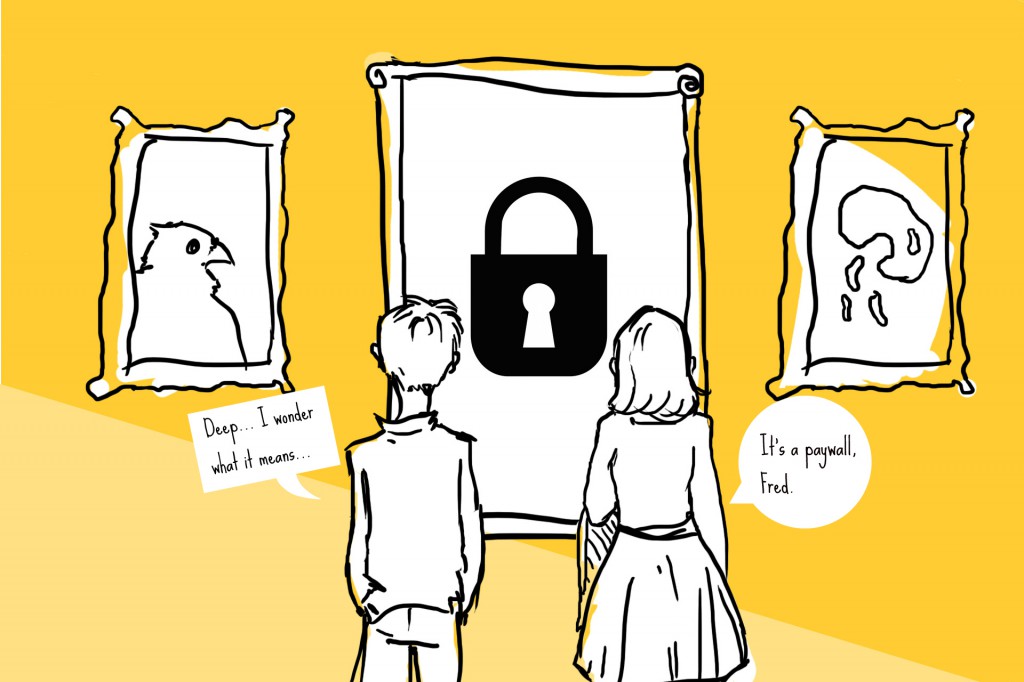
Images are a vital part of science communication, and shouldn't be cast out in favour of long blocks of text. In guild to break down the often circuitous messages of scientific discipline, we need the assist of visuals.
James Balm is Social Media Assistant for BioMed Central. He writes regularly for the BioMed Central weblog and you can also find him on Twitter – @justbalmy .
View the latest posts on the Research in progress blog homepage
Source: https://blogs.biomedcentral.com/bmcblog/2014/08/11/the-power-of-pictures-how-we-can-use-images-to-promote-and-communicate-science/
0 Response to "What Can We Infer Art Is Working on During These First Few Pages and Why Might It Seem Unusual"
ارسال یک نظر